First mention of Klybeck Castle, 1492
Klybeck is named after this castle, which comprises an estate with various farm buildings. In addition to paper mills and sawmills, there is also evidence of a wine press in Klybeck – grapevines were grown here in the 14th and 15th centuries. (Image: Basel-Stadt State Archives)
The early days of the Klybeck site, 1864
Due to political restrictions, Alexander Clavel (1805–1873), a silk dyer and pioneer in the manufacture of synthetic dyes, relocated his dye production to the site of what is now building 125 – at that time still on the outskirts of the city. (Image: © Novartis AG, Novartis Heritage & Company Archives/N Publ MI 000.334#010)
Renamed Ciba, 1884
Following Clavel’s death, his business passed to Robert Bindschedler and Albert Busch, was further expanded, and renamed the ‘Society for Chemical Industry in Basel’ (Gesellschaft für Chemische Industrie in Basel, Ciba). At the same time, residential development in Klybeck was becoming more concentrated. (Image: Basel-Stadt State Archives)
Opening of the Klybeck Canteen, 1968
Not just an architectural masterpiece: the Klybeck canteen serves around 4,000 staff members every day, with minimal waiting times. This icon of industrial history will be preserved during the Neues Klybeck site development and continue to be used as a venue for events and dining. (Image: klybeckplus)
The Sandoz disaster, 1986
A major fire at the Sandoz site in Schweizerhalle, a few kilometres upstream along the Rhine, caused large quantities of chemicals to be released into the river, with devastating consequences. The accident triggered a radical rethink of safety, water management and environmental protection. (Image: Keystone/Gardin)
Merger to form Novartis, 1996
Novartis was formed as a result of the world’s largest corporate merger to date between the two Basel-based pharmaceutical and chemical companies, Ciba-Geigy and Sandoz. (Image: © Novartis AG, Novartis Heritage & Company Archives/N Publ MI 000.334#247)
BASF acquired the chemicals division, 2008
Novartis spun off its chemicals division. After just under 10 years under the ownership of Ciba Specialty Chemicals (Ciba Spezialitätenchemie AG), the division was taken over by the German chemical company BASF in 2008. This meant BASF also acquired parts of the Klybeck site.
Sale of the site, 2019
Novartis and BASF sell their respective parts of the site to Rhystadt and Swiss Life. The two new owners therefore also take on the planning partnership with the Canton of Basel-Stadt, with a view to jointly transforming the site into a green and diverse neighbourhood.
Städtebauliches Leitbild klybeckplus, 2022
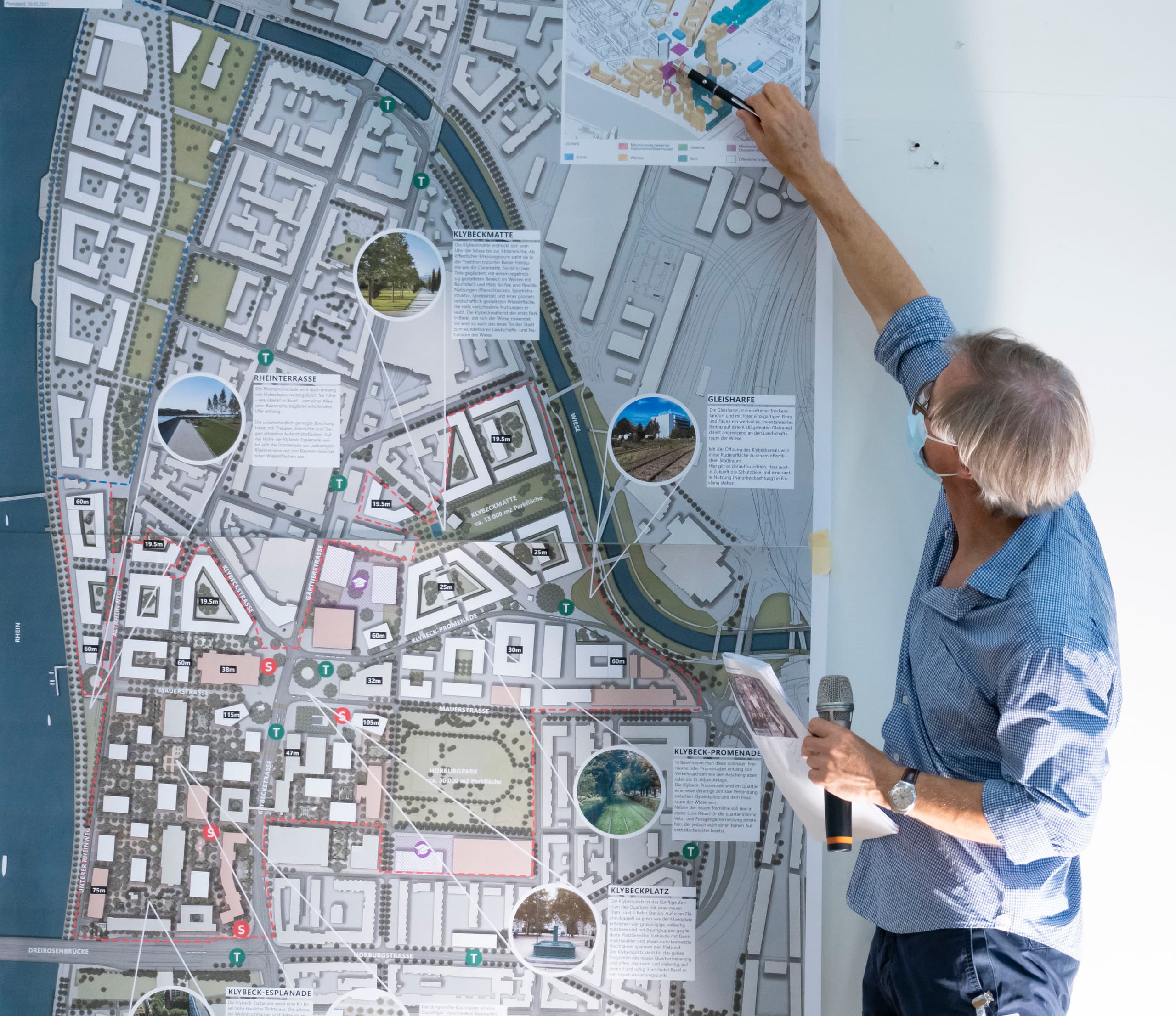
This model provided the framework for the planning principles and describes, for example, the ratio between residential and commercial development, and where green spaces, childcare centres and cycle paths will be located in Neues Klybeck.
Präsentation Richtprojekt, 2025
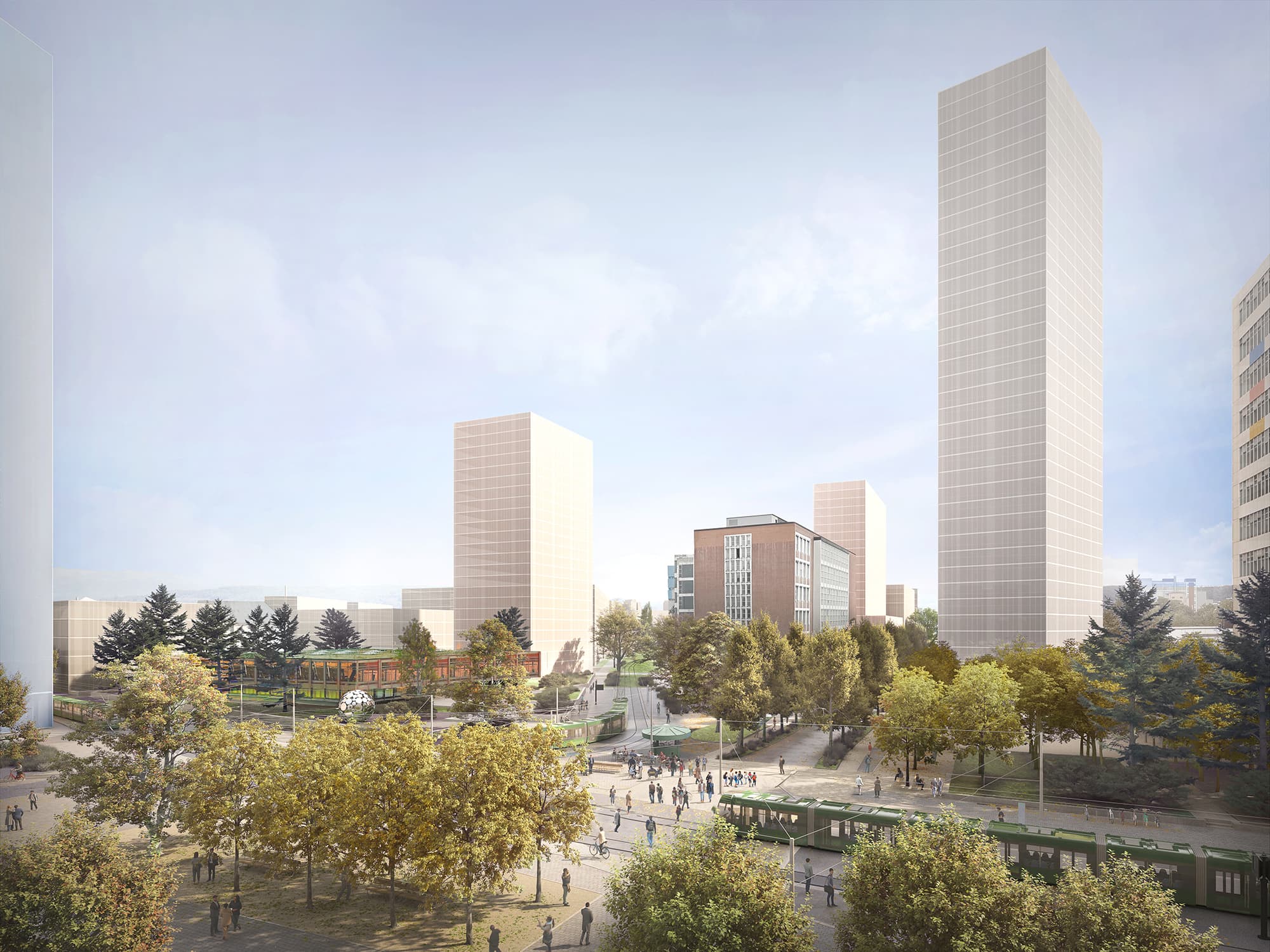
The urban planning model klybeckplus (Städtebauliches Leitbild klybeckplus) is further enhanced and reviewed through the master plan (Richtprojekt). This will form the basis for the local land development plan, which is expected to come into force in 2028. Once this milestone has been reached, the industrial site can be rezoned as a residential area.
A visible transformation, 2030
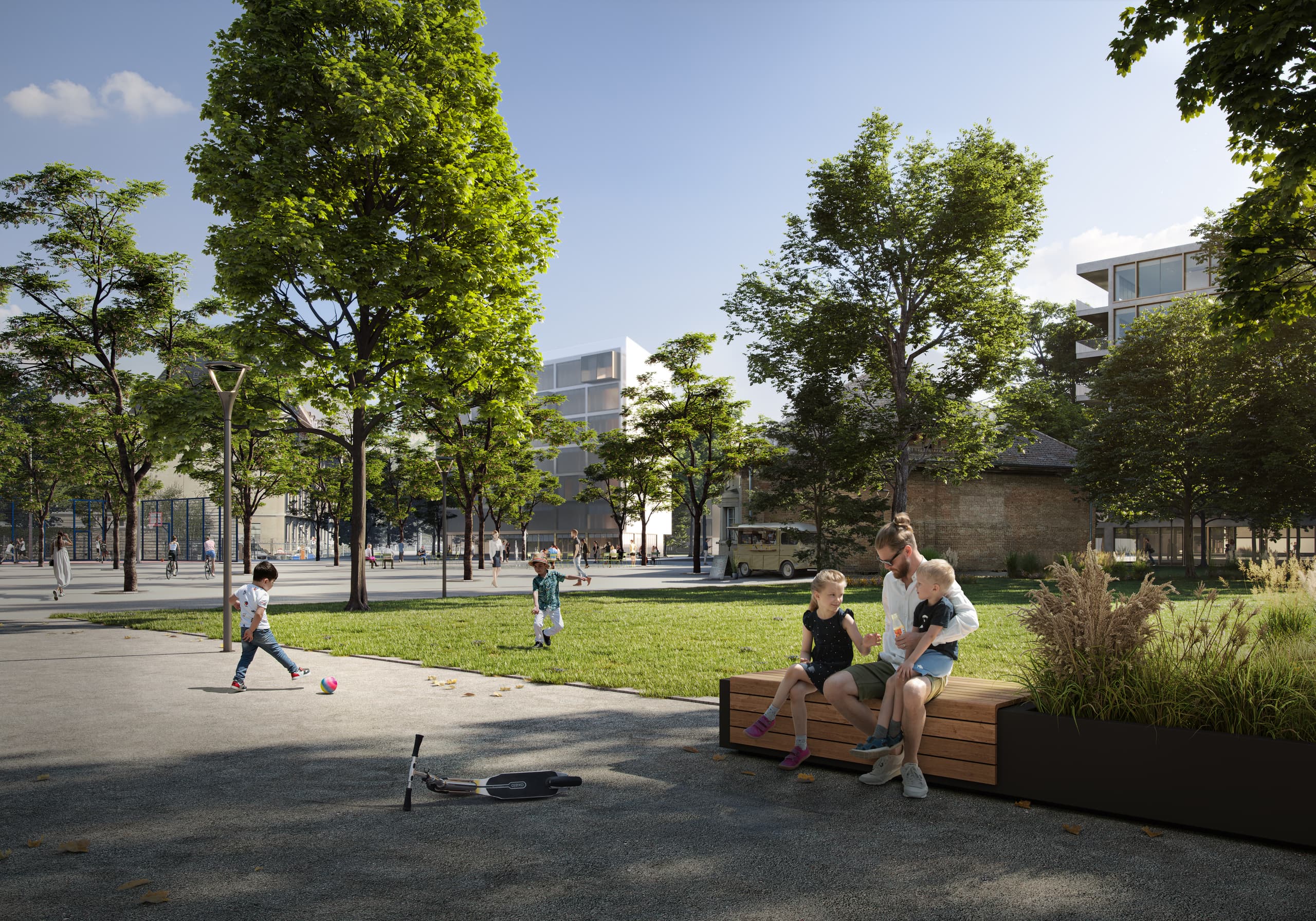
Once the rezoning process is complete, construction of the first residential buildings can begin. Neues Klybeck is clearly taking shape, community life is taking root, and the entire site is being transformed in phases, into a diverse, green and climate-friendly neighbourhood.




_1.8.1968_Ludwig%2520Bernauer-9poMtdFbtMNJbfzKMeOamvsxF7MAVm.jpg&w=2560&q=75)
-I19FUzaexCWh5Hw7yIQCr8awPds8OG.jpg&w=2560&q=75)