So much for ‘lesser’ Basel
This was not always harmless symbolism. Around 1300, Kleinbasel was a city in its own right, with a population of between 1,000 and 1,500 people. It was politically, administratively and legally separate from Grossbasel. The three honour societies mentioned above performed the same functions as the powerful guilds in Grossbasel: city defence, public duties and representation.
Even today, one occasionally gets the feeling that this old, defiant self-confidence still lingers in the walls of many houses. The postcode 4057 covers the neighbourhoods of Matthäus, Klybeck and Kleinhüningen, which are seen as a single district by the outside world.
This postcode appears in the language of the local media ('Spending the summer in 4057'), in graffiti and in rap lyrics. Basel saw the birth of Swiss German rap in 1992 with Urs Baur, also known as Black Tiger. The Klybeck harbour area thus became the backdrop for many music videos.
A similar building density to London
A spirit of resistance has therefore always prevailed in the alleys of Kleinbasel. Originally a working-class neighbourhood, Matthäus is now one of the most densely populated areas in the country with 20,170 people per square kilometre. It is home to many students, cultural cafés, Turkish bridal shops, and Dominican bars. Klybeck was once Basel’s industrial heartland, while Kleinhüningen started out as a fishing village before becoming a port and then an industrial area. Today, the former workers' houses are home to people from all over the world, and a variety of languages can be heard on the way to school and in the classrooms.
The 4057 district has witnessed many changes throughout its history, including the taming of the wild Rhine, the construction of the Rhine harbour which transformed Kleinhüningen from a fishing village into a transshipment hub, 150 years of the chemical industry on the Klybeck site, waves of migration from across Europe and the rest of the world, and economic ups and downs which have led to factories either expanding or closing down. Many signs of the times can still be seen today in street and pub names, accents and family histories.
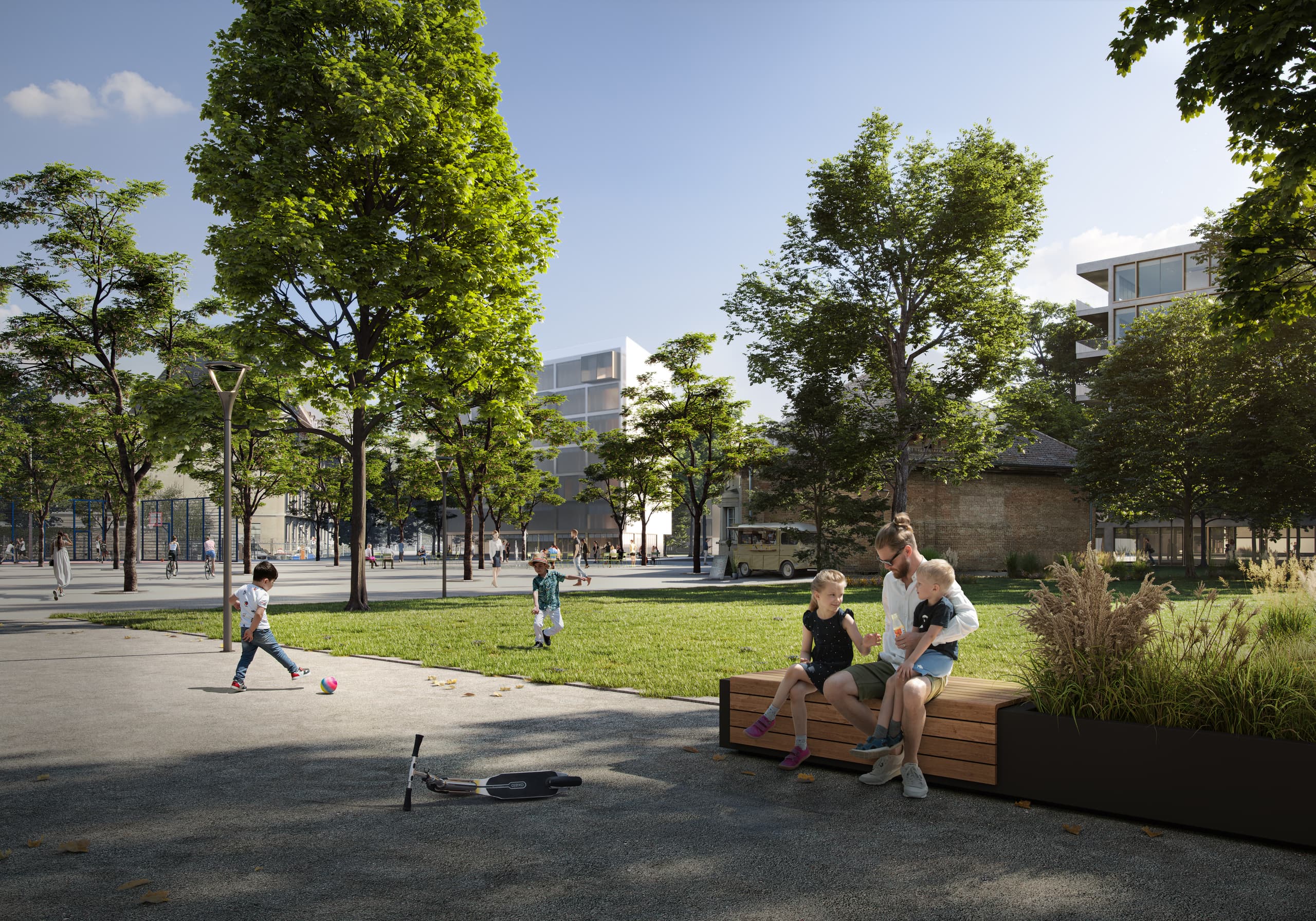
Neues Klybeck is the next step in the area's development. New paths are emerging between the rivers Wiese and Rhine, creating new spaces and better connections. However, the site is set to become part of the 4057 district, rather than a replacement or alternative.
What is to remain
Residential living will not be possible on the site until the end of 2028. And it will take considerably longer for the construction phases to be completed. Neues Klybeck will change during this time. The challenge lies in shaping the development so that current residents can continue to be proud of their neighbourhood, while also enabling newcomers to find their place in the proud 4057 community.