When the Basel chemical industry moved to Klybeck at the beginning of the 20th century, production was the primary focus. The Rhine was a practical transport route and, at the time, it carried away industrial wastewater free of charge. Swimming in the Rhine, something we now take for granted, would have been unthinkable back then, as chemical products were manufactured on an industrial scale here, including the colour fuchsia, which was once a global export hit. The world-famous Ferrari red also originated here.
Growing success led to expansion and corporate consolidation, as well as the addition of various medicines, fertilisers and other dyes to the product range. Consequently, the area between the Rhine and the Wiese experienced a significant boom in the 1950s, with numerous factory buildings, headquarters, catering facilities and roads being constructed. Ciba, Geigy and Sandoz were particularly influential companies in the area. Ciba-Geigy's merger with Sandoz led to the formation of Novartis in 1996. In 2008, the chemicals division was spun off and taken over by the German chemical company BASF. In 2019, Novartis sold its portion of the site to Rhystadt and BASF sold its portion to Swiss Life.
This marks the beginning of a new chapter in the district’s history after more than 150 years. Plans drawn up by Rhystadt AG, Swiss Life and the Canton of Basel-Stadt as part of the klybeckplus project outline how this transformation will take place, turning a sealed, partially contaminated industrial site into a mixed-use urban quarter.
Why 1,550 trees are so important
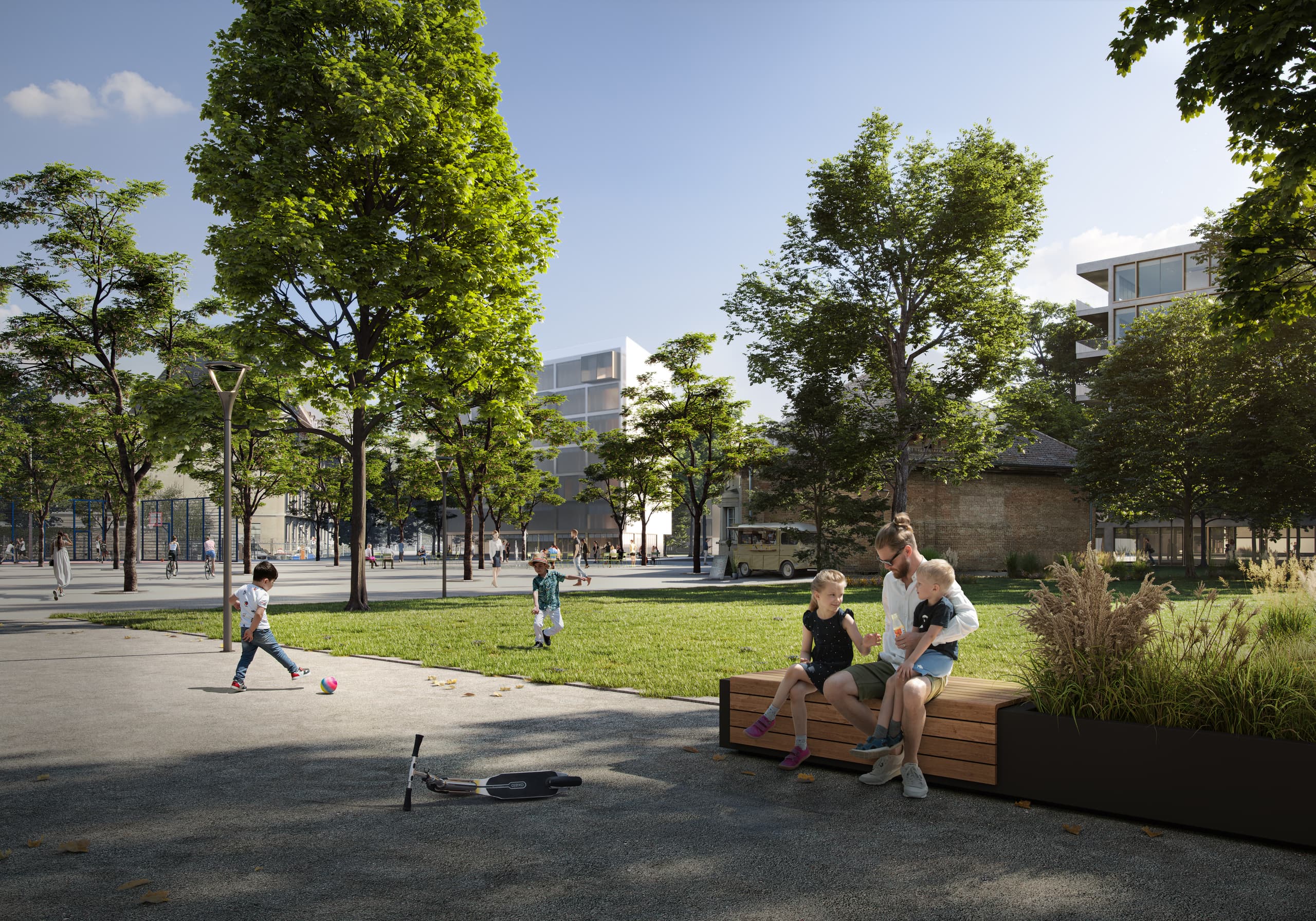
The challenge lies in alleviating the pressure on an area that is largely sealed and partially contaminated, and in unsealing land in a sustainable and prudent manner. Above all, this means less tarmac and asphalt and more flora, fauna and trees. By the end of the development project, over 1,550 trees are set to grow across the entire site – almost three times as many as there are today. Existing trees will be preserved wherever possible and supplemented by numerous new plantings.
Connecting the two large Basel biotopes around the Rhine and Wiese rivers is also significant for people, animals and plants. Currently hindered by fences, walls and transport routes, animals and plants will be able to move more freely between the two large wetland areas, thereby enhancing biodiversity.
This development will also impact the urban climate. Greater amounts of green space, unsealed ground, and green front gardens, roofs, and façades will help to store water and contribute to the formation of cool air at night. This is particularly important in view of increasingly long and intense heatwaves in summer, as it ensures that the neighbourhood heats up less and cools down more quickly at night. This improves quality of life and reduces health risks, especially for older people and young children.
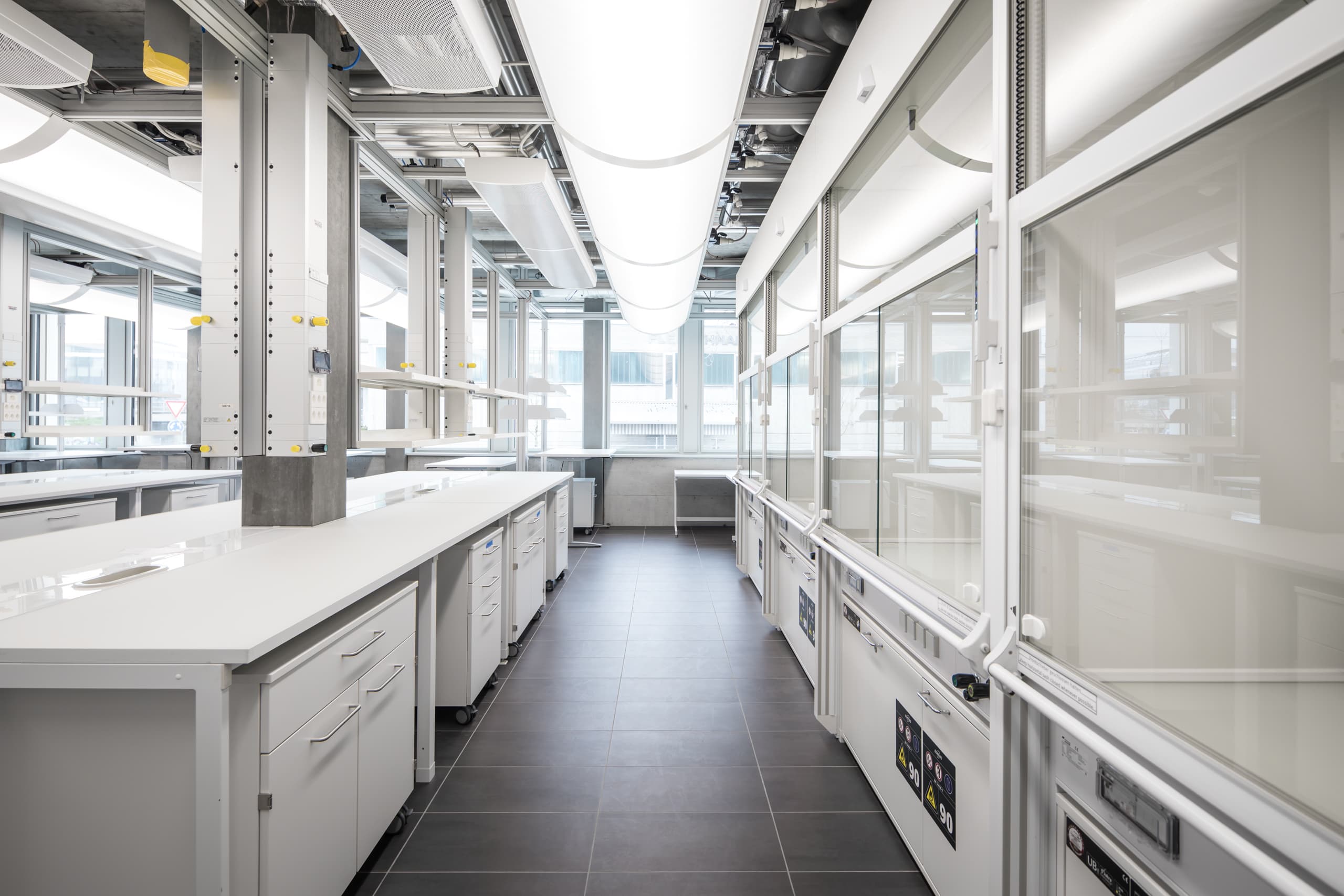
However, the area’s industrial past has also left its mark, both underground and within the buildings. Thanks to ongoing investigations, we now have a detailed understanding of the contamination on the site. Legal regulations governing the management of contamination provide a clear framework. Every construction project is rigorously assessed and closely monitored to ensure that people can live, work and play healthily and happily in Neues Klybeck in the future.
Resource-efficient management
Modernising the energy supply is also part of the neighbourhood’s development. No fossil fuels are used in Neues Klybeck. Instead, locally available resources such as river water, geothermal probes, solar energy and waste heat are used. These measures are complemented by a connection to the IWB district heating network in Basel. This ensures that the neighbourhood is developed in line with the Canton of Basel-Stadt's climate targets: the canton aims to be climate-neutral by 2037.
The reuse of building materials, avoidance of grey energy and responsible use of land and resources on the newly developed site also contribute to this goal.
A neighbourhood in transition
The development of the Klybeck site is a long-term project involving high environmental, social and urban planning standards. Transforming the former industrial site into a nature-oriented neighbourhood offering space for modern living and working amidst greenery is a challenging and ongoing process. However, swimming in the Rhine was once unthinkable, too, and is now an integral part of city life in summer.