Before the straightening
Before Tulla's work, the Rhine was a wild river that frequently changed course, sometimes swallowing entire villages. It was supposed to mark the border between France and Germany, but this was regularly blurred – some villages changed nationality due to the river's natural shifting.
On the Upper Rhine, fishermen relied on sturgeon and salmon for their livelihood. Farmers and raftsmen also took advantage of the abundance of fish, which led to conflicts with professional fishermen. From the Middle Ages onwards, fishing was strictly regulated: poachers risked the gallows under certain circumstances. In northern Kleinbasel, street and pub names still commemorate this golden age of fishing. The Salm, meaning 'salmon', remains an emblem of the Kleinbasel district to this day.
What was lost, what was gained
However, the straightening of the Rhine did not benefit everyone: entire fishing communities were displaced, and farming and fishing families who refused to abandon their traditional way of life were evicted to make way for construction crews. Armies of workers with horse-drawn carts, pickaxes, shovels and wheelbarrows were needed to realise this mega-project, working for low wages and in harsh conditions.
The project yielded dry land for industrial agriculture and a navigable waterway as far as Basel. In 1832, the first steamship from Germany reached the city. In 1886, the Mannheim Convention declared the stretch of the Rhine from Mannheim to Rheinfelden to be international waters, rendering customs operations on the river obsolete.
A few decades later, the new waterway brought the chemical industry to Klybeck. Among other things, the colour used for Ferrari red, fuchsia, was produced here, followed later by medicines and fertilisers. However, the Atlantic salmon, a former symbol of the city, disappeared in the 1950s due to continuous water quality deterioration and obstructed migration routes.
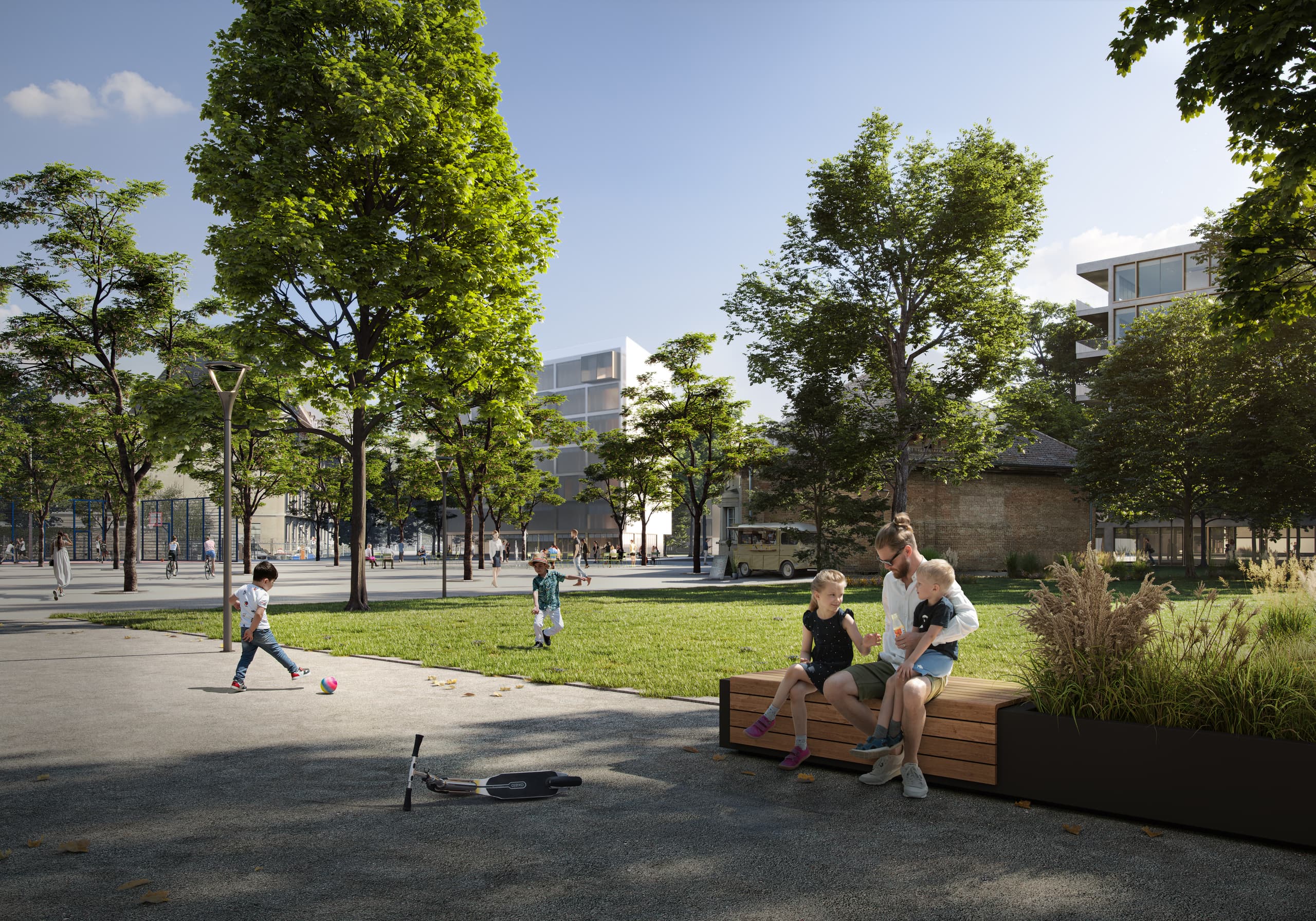
Today, Basel is renaturalising the Rhine once again. In the Neues Klybeck area, the connection between the Rhine and Wiese biotopes, which was severed by industry and traffic, is being restored. The aim is to return part of nature's identity that was lost in the name of progress.