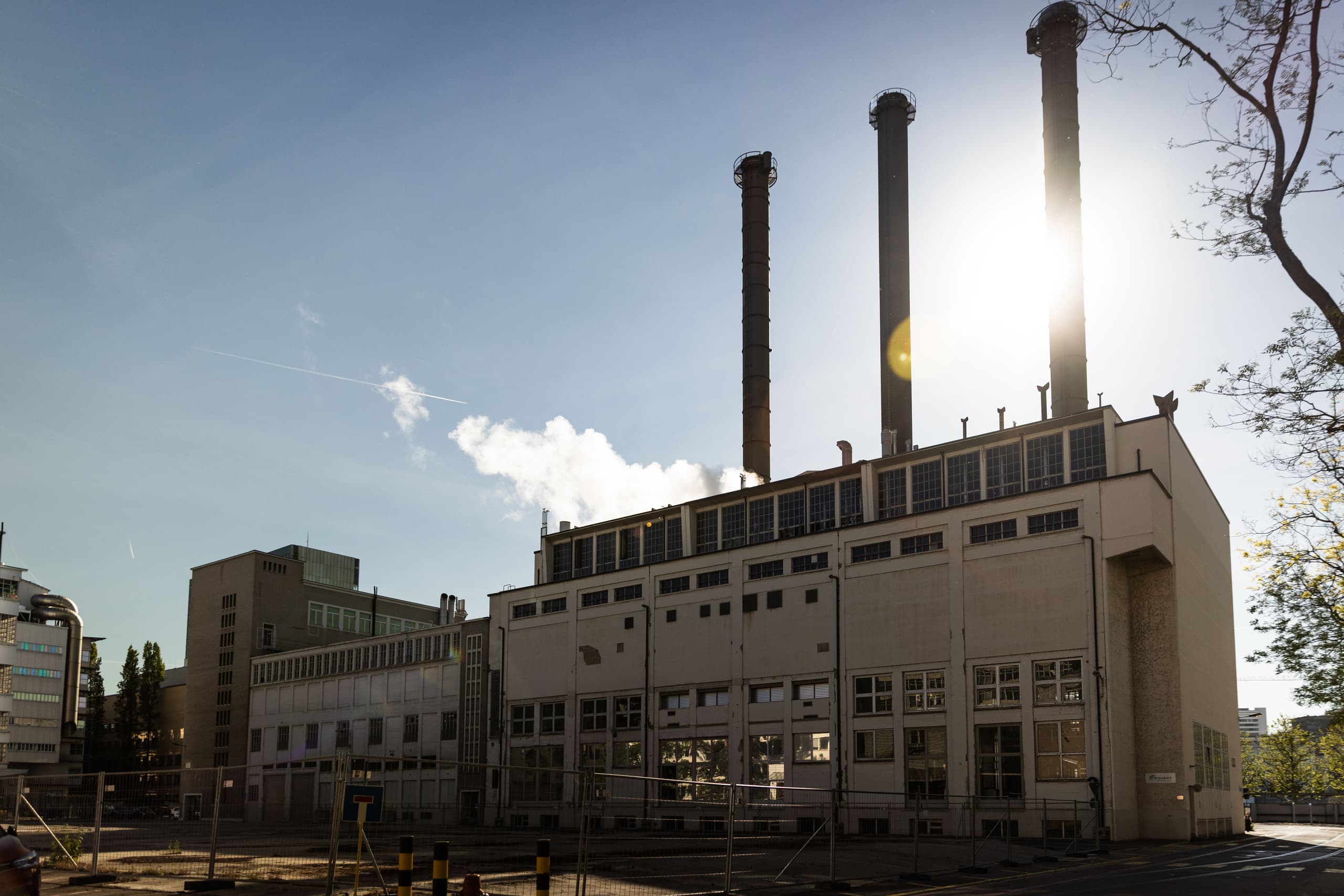
Around 2,000 people already work, conduct research and study on the Klybeck site today. Among laboratories, workshops, studios and offices, employees of life sciences companies, start-ups and creative professionals meet. Yet the industrial surroundings are not yet inviting everywhere: in many places, tarmac and sealed surfaces still shape the scene.
This is where the transformation begins: every building, every square and every tree is an element that must be accompanied step by step on the way to the new district.
Neues Klybeck is developing into a mixed-use urban district with 7,500 job opportunities and housing for around 8,500 people. The concept behind it is known as "Soft City." It comes from urban planner David Sim. Mono-functional buildings are avoided, so that people can cover most of their everyday needs within their own neighbourhood.
The District of Tomorrow
Anyone moving around here in a few years will find schools, restaurants and shops right on their doorstep. Distances are short, because workplaces, leisure facilities and daily life are close together. At the same time, the area will develop distinct neighbourhoods with their own character that connect to the neighbouring districts, for example through perimeter-block buildings that take up the structure of the Klybeck quarter. Part of the planning is also modern stormwater management. Among other things, this means more unsealed surfaces, which in turn means more space for trees and more cooling for the urban climate.
More than 1,500 trees will stand on the site at the end of the transformation, almost three times as many as today. Most existing trees will be preserved wherever possible. In addition, new parks and open spaces are being created, such as the Klybeckmatte green space, which offers new recreational space for everyone in and around Basel.
Mobility is being rethought as part of these developments too. New paths will directly connect the Rhine and the Wiese. Pedestrians and cyclists have priority, car use is restricted, and good accessibility is guaranteed at all times. This rethinking of the city also applies to the buildings themselves.
Looking Further
The best resource is often the one that is already there. Embodied energy, the energy contained in the production of building materials, is most easily avoided when existing structures are reused. That is why around 24 existing buildings in Neues Klybeck are to be preserved or extended upwards.
A good example is FLOW. It is an existing laboratory and office building in the heart of Neues Klybeck that is being renovated and extended. It will soon offer around 19,000 m² of state-of-the-art space for research and offices, while retaining its core of solid construction from the 1980s. FLOW is also aiming for LEED Gold certification and will have a rooftop solar panel system.
FLOW is only the beginning. Sustainable urban development is not a single project but an interplay. It succeeds when people, places and ideas come together. Neues Klybeck is a place where this interplay is taking shape right now.